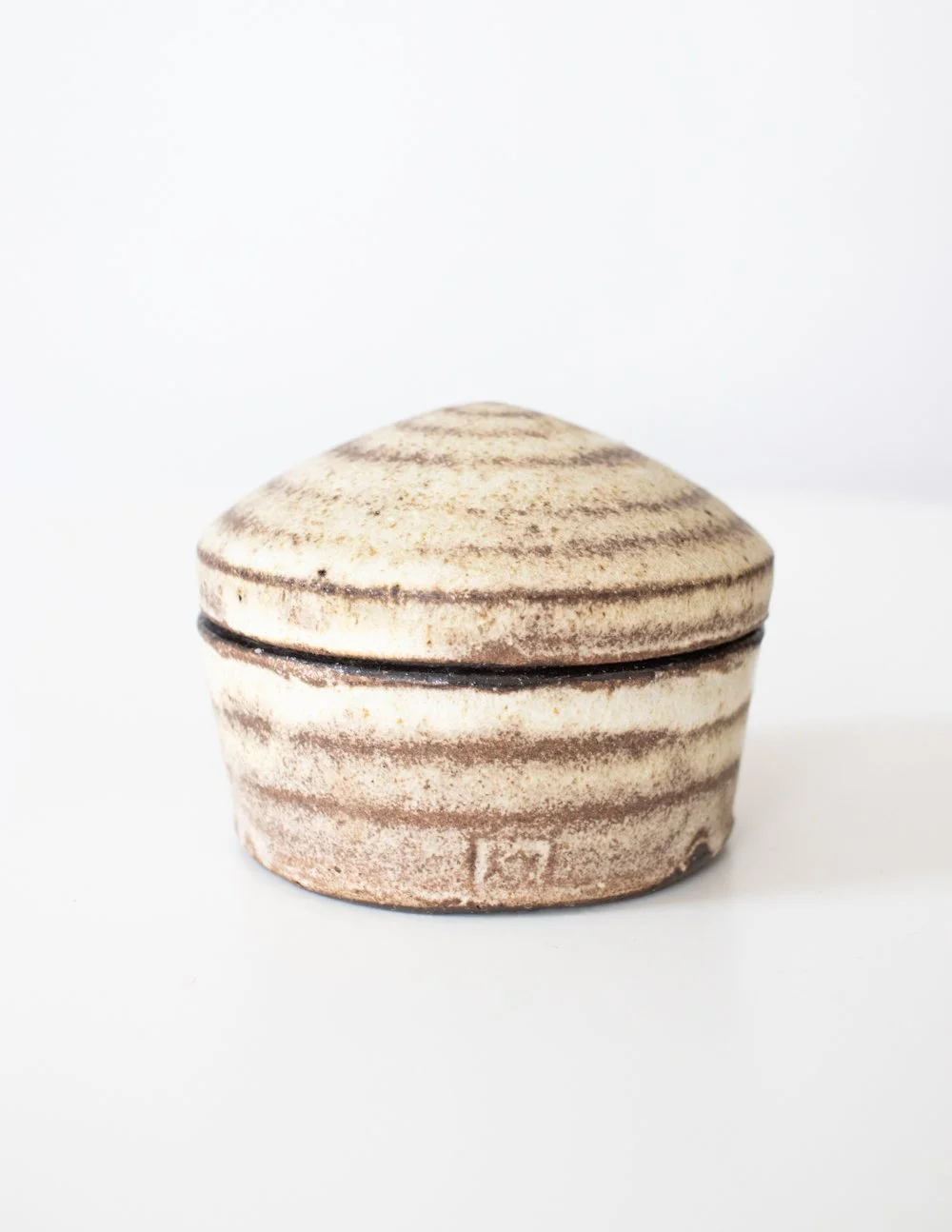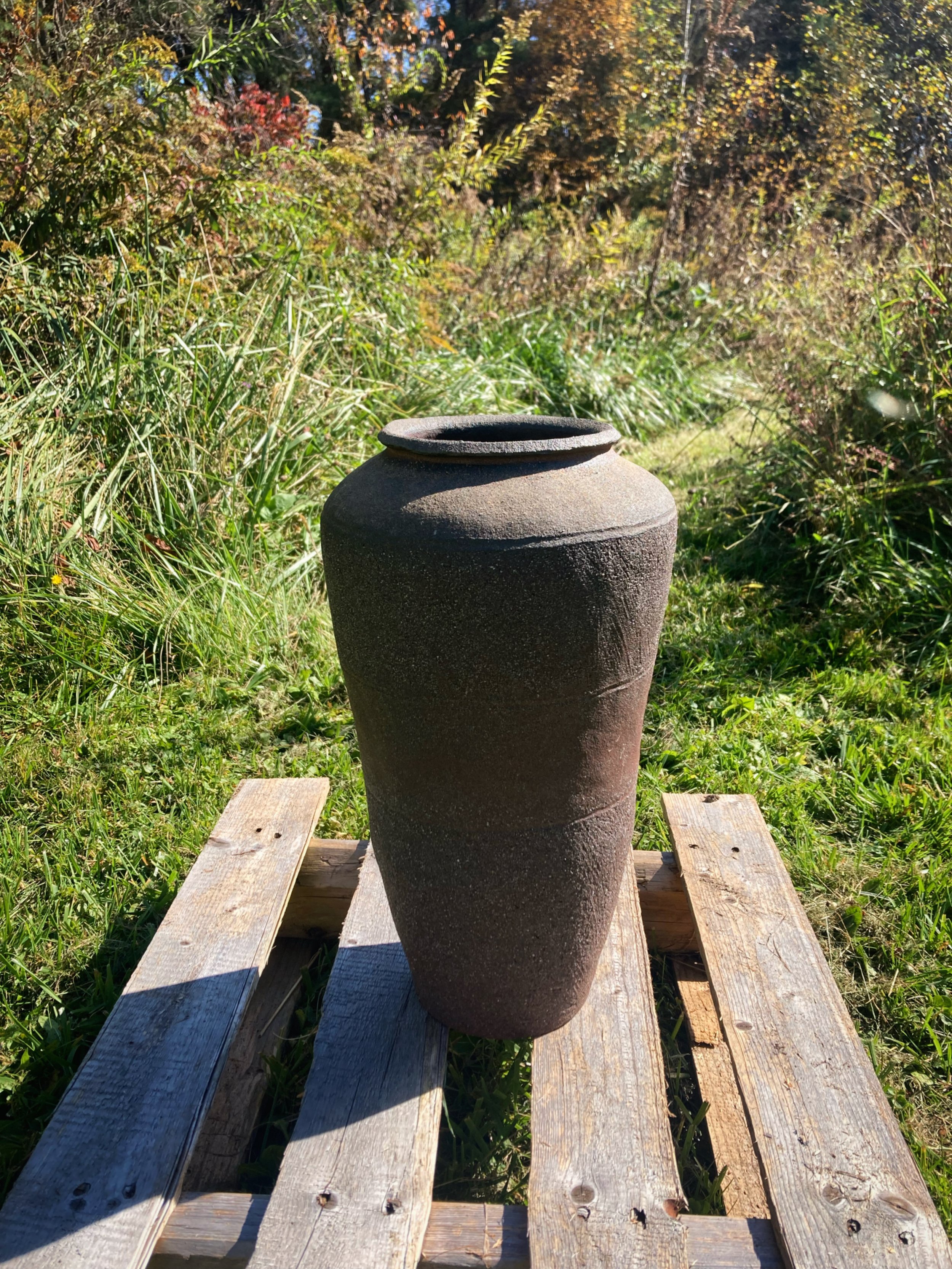
Coiled vessel made from the clay in my backyard, woodfired and reduction cooled
About
I’m an artist who works in relationship with the land, making vessels using clay from my backyard in Burnsville, North Carolina. I came to North Carolina as a gardener and became curious about making more than a garden from the clay beneath my feet—I wanted to understand other ancient ways of putting my hands in the soil, and that curiosity led me to pots.
I work with local materials and wood firing as a continuation of practices humans have engaged in since before the written word. Working this way makes me feel human in a way I find beautiful. I embrace the constraint of localism, using the limits of these materials to deepen my understanding of ceramics and the pottery traditions of this place. I see materials not as passive substances, but as collaborators: the clay’s color and texture shape the marks that emerge, evidence of the making process, and flame and ash from long wood firings leave their own fire marked surfaces on the pots. People have made pots here for a long time, and I am now one of them.
The clay I use to make pots is the same clay from which I grow my garden. Harvesting materials from my backyard keeps my practice closely tied to the land and the small ecosystem I’m trying to support through ecological gardening. Working this way is carbon-conscious and resilient, relying less on commercial mining, industrial processing, and long-distance transport. Alongside local clay, I incorporate nearby materials such as kaolin, feldspar, and ash from invasive grasses or community wood stoves, allowing place to speak through my work.
While wood firing itself is not carbon neutral, the time, labor, and attention it requires make it fundamentally anti-extractive. Fired this way, the pots carry qualities of slowness and care into daily life, as opposed to industrial speed, placelessness, and disposability. I want the work to feel, as Yanagi described, “born, not made,” and to bring those values into the intimate spaces we inhabit.
FIND MY WORK
My work is available year-round at the following galleries and shops:
MICA Gallery — Bakersville, NC
Lakeview Gallery and Gardens — Spruce Pine, NC
Ginny Lou’s — Marshall, NC
I also welcome visitors to my studio in Burnsville, NC. If you’d like to set up a visit, please get in touch!